Why Amateur Golfers Mentally Collapse on the Course
The Hidden Gap Between Practice and Reality (Why Amateur Golfers Mentally Collapse)
Why do you think Amateur Golfers Mentally Collapse on the Course?
Here is why Amateur Golfers Collapse Mentally on the Course.
Many amateur golfers feel confident on the driving range but completely lose control once they step onto the course. The main reason is simple: the environment changes everything. On the range, there are no consequences. You can hit 50 balls, adjust, and reset. On the course, however, every shot counts. This shift creates pressure, and pressure triggers tension, rushed swings, and poor decision-making.
If you haven’t read it yet, check out our previous post:
👉 Why You Hit It Well on the Range but Not on the Course (internal link)
Pressure Creates Physical Tension
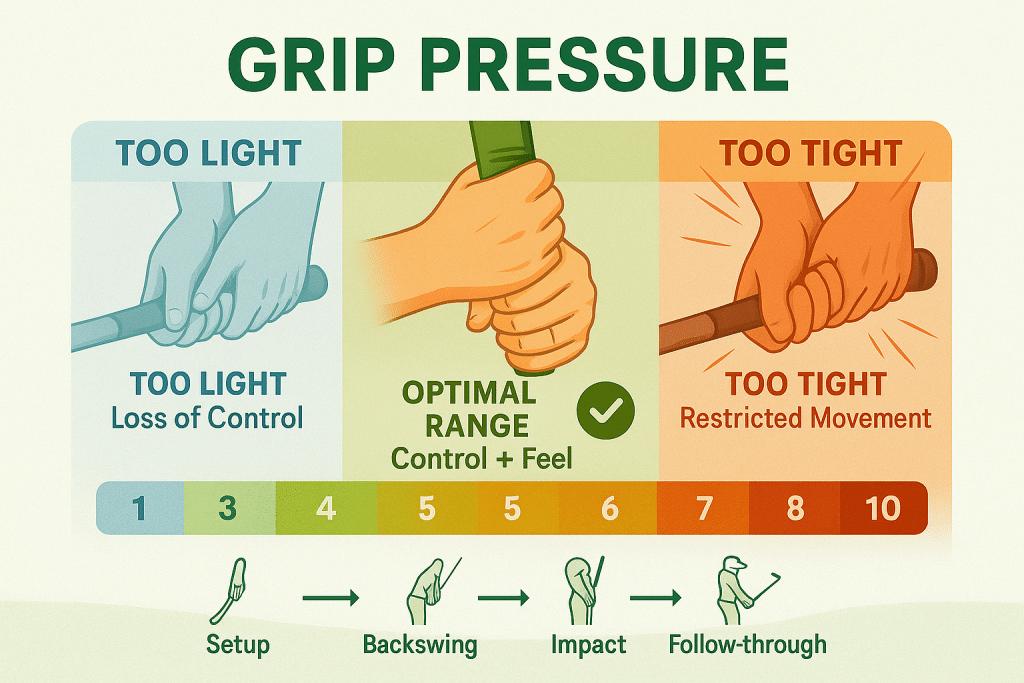
When amateurs feel pressure, their bodies react instantly. Grip tightens, tempo speeds up, and the swing loses rhythm. Unlike professionals, amateurs often lack a reliable pre-shot routine to stabilize their mental state. This leads to inconsistent contact and the classic “mental meltdown.”
Overthinking Kills Natural Motion
On the range, players focus on mechanics. On the course, they try to control everything at once—swing path, face angle, distance, hazards. This overload causes hesitation and breaks the natural flow of the swing. Golf is a reactive sport, not a thinking contest.
Lack of Course Experience
Another key reason is decision-making. Many amateurs don’t practice playing golf—they only practice hitting balls. The course requires strategy: club selection, risk management, and reading lies. Without experience, small mistakes quickly snowball into frustration.
How to Stay Mentally Stable
How to Stay Mentally Stable
To avoid collapsing mentally on the course:
- Build a consistent pre-shot routine
- Focus on one simple swing thought
- Accept bad shots quickly and move on
- Practice on-course scenarios, not just range balls
One of the biggest reasons amateurs mentally collapse on the course is not just a single bad shot—but what comes after it. A poor drive leads to frustration, frustration leads to tension, and tension leads to another mistake. This chain reaction is often called the “snowball effect.” Unlike professionals, who are trained to reset emotionally after every shot, amateurs tend to carry mistakes forward. By the third or fourth hole, the mental pressure compounds, and performance drops significantly.
This is where emotional control becomes more important than swing mechanics. The ability to “reset” after each shot is a skill, not a personality trait. Players who learn to treat every shot as independent dramatically reduce blow-up holes and improve consistency over time.
Crazygolflab Insight
At Crazygolflab, we believe the real difference between range performance and on-course performance is not technique—it’s mental structure. Amateurs practice swings, but they don’t practice thinking. The best way to fix on-course meltdowns is to train your brain the same way you train your swing: with repetition, structure, and intention. Build routines, simulate pressure, and most importantly, learn to let go. Golf is not about perfect shots—it’s about managing imperfect ones.
As an amateur golfer myself, I have never taken a proper professional lesson and have always relied on youtube videos, tried to learn from strangers out in the range and read through quality blogs on the internet.
Last piece of advice from Crazygolflab..
At the end of the day, remind yourself that no single shot defines your round—just breathe and reset before every swing. And next time you feel that pressure creeping in, trust the swing you built on the range and let it happen, instead of trying to control it.
Have fun, become crazier at Golf with your endless passion, and you shall conquer it one day.